
Choose a trim or body specification
A rib that works on a cuff may be too firm for an entire tank. Describe where the fabric will sit, how close it fits and how much extension the wearer needs.
The finishing detail that can change how an entire garment wears. Choose rib by its recovery and compatibility with the body fabric, not only by the colour match.
Cuffs · Shape and recovery
Custom apparel · OEM, ODM and private label
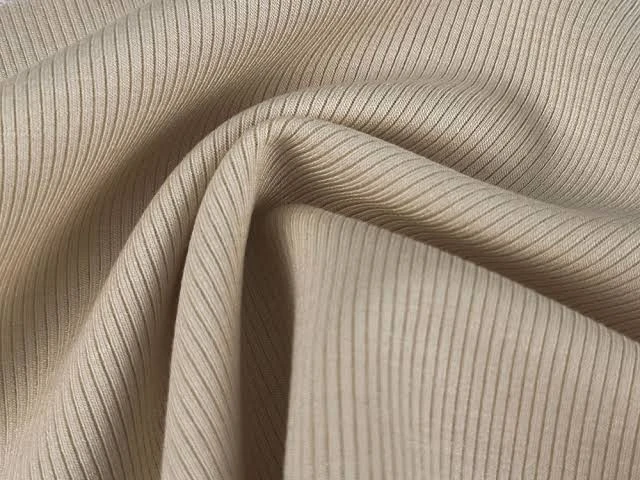
Rib knit is a double-knit structure with alternating face and reverse stitch columns that form visible ribs. It stretches readily across its width. It can be used for cuffs, neckbands and waistbands, or as a garment body, with fibre blend and construction chosen to suit the required recovery.
These are starting points for fabric selection. The chosen quality is approved for the specific garment.
Balance the body weight with a rib that returns to shape.
Check stretch, coverage and comfort at the intended fit.
Review ribbed tops or lounge pieces in movement and after washing.
GSM is fabric mass per square metre. It helps compare weight, but does not alone establish quality, coverage or performance.
A rib that works on a cuff may be too firm for an entire tank. Describe where the fabric will sit, how close it fits and how much extension the wearer needs.
Stretch the sample and assess how it returns after rest, then repeat the review after laundering. Tell us if the trim must hold a sleeve opening or support a waistband.
The appearance can change as ribs open. Review shade and opacity in the stretched garment, particularly for light colours and fitted active or casual tops.
Artwork and fabric should be approved together. Explore our decoration services for the wider process.
A small woven label or badge may preserve the rib texture more easily than a large dense stitched area.
Approve a decoration that moves with the fabric; test it at the extension the garment actually reaches.
Assess distortion and backing carefully. Keep the intended stretch of the panel in mind before fixing logo size and density.
Follow the garment label and reshape ribbed openings without stretching them while wet. Avoid leaving heavy wet garments hanging by a narrow rib neckline or shoulder area.
For sampling, assess cuffs and waistbands after repeated handling as well as a wash. Body and rib may be different blends, so verify that their care and dimensional behaviour are compatible.
Practical answers for choosing, decorating and caring for the fabric in your garment range.
It is used for neckbands, cuffs and waistbands, as well as ribbed tanks and other fitted pieces. Select a trim quality or body quality according to the position and the intended stretch.
The numbers describe alternating knit and reverse stitch columns. A 2×2 rib generally shows a wider rib pattern. Compare actual swatches for appearance, stretch and recovery before making the choice.
No. Rib describes the knitted structure. It can use cotton, synthetic fibres or blends, sometimes with elastane for recovery. The fibre percentages need their own specification.
It can if the construction, recovery or care does not suit the application. Review the rib after stretching, resting and washing, especially for cuffs and close-fitting necklines.
Yes. Check coverage and comfort at the actual fit, not only with the swatch relaxed. Agree the stretch direction, recovery and seam construction before approving the garment.
Approve the two together for shade, thickness, hand and shrinkage. A visual colour match alone is not enough; the rib also has to hold the opening without pulling the body out of shape.
Yes, with a compatible decoration method and artwork. The print must be reviewed while the rib is extended as well as relaxed, because the visible design can change as the ribs open.
A dense embroidered area can restrict movement and distort the ribs. Try a smaller mark, different backing or another branding method on a sample when stretch is important.
Use the garment care label and reshape them gently. Avoid pulling a wet rib opening, and inspect recovery after washing if you are approving a fabric for a production order.
Specify whether it is for trims or a garment body, the rib appearance, blend, colour, width, hand and recovery requirements. Include the linked garment design and quantity for a relevant quote.
Send the design, intended fit, colours, artwork, size range and quantity. If you have a reference garment, use it to communicate the hand and finish you want. We discuss the fabric, make the sample and record the approved construction before bulk production.
Review dimensions, shade, decoration and the care result together. Keep the signed-off sample and written specification as the reference for the order.
See how sampling worksTell us the garment, fit, colour, artwork and quantity. We will discuss the fabric as part of your custom apparel order, with the selected specification, sample and minimum confirmed in writing.