
Choose the inside deliberately
Small compact loops and a more pronounced loopback do not feel identical. Compare the reverse against the skin and decide whether the garment is meant to be worn over a tee or directly on the body.
A loopback sweatshirt fabric for relaxed layers, sweat shorts and coordinated sets. Choose it by the inside feel as well as the shape and finish of the outer face.
Loopback · Versatile layers
Custom apparel · OEM, ODM and private label
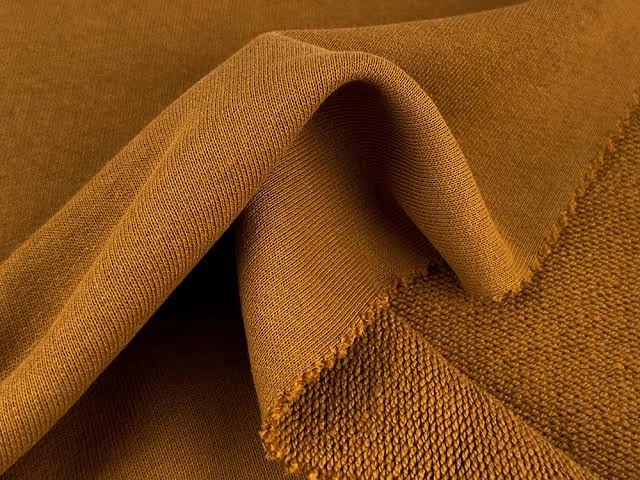
Cotton French terry is an unbrushed sweatshirt knit with loops on the reverse and a smoother face. It is used for hoodies, sweatshirts, joggers and shorts. For a custom range, compare loop size, body weight, surface finish and washed stability before choosing the garment specification.
These are starting points for fabric selection. The chosen quality is approved for the specific garment.
A loopback alternative for everyday sweatshirt designs.
Review drape and knee recovery on the intended trouser or short pattern.
Coordinate both pieces with matched rib, shade and washing behaviour.
GSM is fabric mass per square metre. It helps compare weight, but does not alone establish quality, coverage or performance.
Small compact loops and a more pronounced loopback do not feel identical. Compare the reverse against the skin and decide whether the garment is meant to be worn over a tee or directly on the body.
Top and bottom may need different construction details even when they share a fabric. Check pocket bags, waistband build and seam bulk instead of approving only a flat swatch.
Discuss seam finishing and internal labels so rough edges do not catch the loops. Check samples for pulled loops after handling, washing and fitting.
Artwork and fabric should be approved together. Explore our decoration services for the wider process.
Use the smooth face for the print and approve the finished ink hand after washing.
Check backing and stitch density against the chosen weight, particularly on a smaller chest or shorts logo.
If a wash or special surface finish is requested, approve the shade, dimensions and loopback after that process.
Maintain French terry according to the garment label. Close fastenings where appropriate and keep rough hook-and-loop surfaces away from the loopback. Inspect both face and reverse when checking a washed sample.
A looped reverse does not make every French terry fabric equally cool or light. Weight and garment layering matter. Confirm the intended season by wearing the sample, then record the agreed care and shrinkage tolerances.
Practical answers for choosing, decorating and caring for the fabric in your garment range.
It refers to the loops visible on the reverse of the fabric. They remain unbrushed, which distinguishes French terry from a brushed-back sweatshirt fleece.
Yes. It is a useful option for everyday hoodies when the buyer wants an unbrushed inside. Approve the weight, hood structure, rib and fit together rather than choosing by fabric name alone.
Not necessarily. Both are available in different weights. At a comparable construction, the absence of brushing changes the hand; check actual weight and sample comfort rather than assuming French terry is always lighter.
Yes. Check opacity, pocket construction and how the hem holds its shape. A sample also helps decide whether the waistband needs a different rib or an elastic casing.
It can. Test the selected fabric and finished sample using the intended care process, then agree dimensional tolerances before the pattern is approved for bulk.
It has knit give, but stretch and recovery vary. For fitted garments or close waistbands, assess whether the design needs an elastane blend or a separate recovery-focused rib.
Yes, if the face finish and print process are suitable. Review the artwork at full size so the print does not make the back panel excessively stiff.
Follow the care label and avoid snagging the reverse on rough fastenings. For quality review, look for pulled loops and uneven appearance after laundering the finished sample.
Yes. Approve both garments together for shade, hand and washed size. Include the waistband, cuffs and any contrast panels in the same sample review.
Specify the garment, intended fit, colour, target weight or reference hand, loopback preference, artwork and quantity. Ask to review a washed sample and matching rib before bulk approval.
Send the design, intended fit, colours, artwork, size range and quantity. If you have a reference garment, use it to communicate the hand and finish you want. We discuss the fabric, make the sample and record the approved construction before bulk production.
Review dimensions, shade, decoration and the care result together. Keep the signed-off sample and written specification as the reference for the order.
See how sampling worksTell us the garment, fit, colour, artwork and quantity. We will discuss the fabric as part of your custom apparel order, with the selected specification, sample and minimum confirmed in writing.