
Specify both sides
A smooth outer face helps a graphic read clearly, while the brushed reverse sets the next-to-skin feel. Request a swatch that shows both; the photograph of the face cannot establish the brushing quality.
For a hoodie or sweat set that feels warm and substantial. The brushed inside matters, but so do the face, rib recovery and the weight of the finished garment.
Hoodies · Warm handle
Custom apparel · OEM, ODM and private label
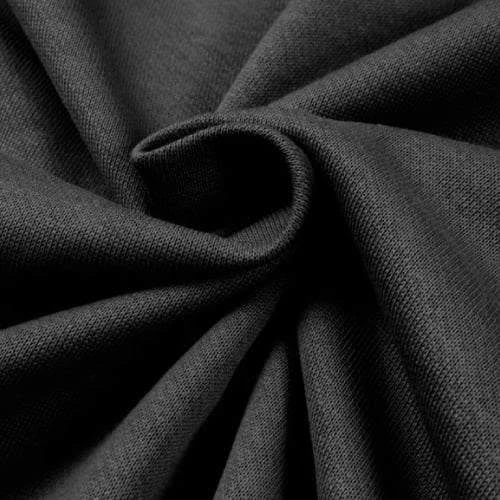
Brushed cotton fleece is a sweatshirt knit whose back is raised to create a soft, fleecy surface. The cotton content may be pure cotton or part of a blend. It suits hoodies, sweatshirts and joggers, with the exact feel and warmth determined by the yarn, construction, weight and brushing.
These are starting points for fabric selection. The chosen quality is approved for the specific garment.
Select the body, hood lining and rib together for a balanced garment.
Use a suitable sweatshirt fleece for the sweatpant styles in this range.
Approve tops and bottoms in the same shade and compatible fabric lots.
GSM is fabric mass per square metre. It helps compare weight, but does not alone establish quality, coverage or performance.
A smooth outer face helps a graphic read clearly, while the brushed reverse sets the next-to-skin feel. Request a swatch that shows both; the photograph of the face cannot establish the brushing quality.
A heavy body with weak rib can produce stretched cuffs and a loose hem. Review cuff depth, waistband tension and colour matching on a complete hoodie or jogger sample.
Inspect the surface after the agreed wash and wear assessment. Discuss pilling and fibre shedding expectations before bulk, especially for dark garments worn over light T-shirts.
Artwork and fabric should be approved together. Explore our decoration services for the wider process.
Confirm the outer face and cure conditions suit the selected ink. Check whether the print changes the drape.
A sweatshirt body can carry a stitched logo, but backing and density still need approval around pockets and seams.
Match neck labels, cords and rib to the weight and intended care of the garment.
Follow the finished hoodie or jogger label, including its drying instructions. Turn decorated garments inside out where directed and avoid washing them with rough fastenings that may abrade the surface.
For sampling, check loose fibres, pilling and size changes after the same care process the buyer expects to use. Approve the brushed hand again after washing rather than only on an unwashed swatch.
Practical answers for choosing, decorating and caring for the fabric in your garment range.
The reverse is the key difference: fleece is brushed or raised, while French terry keeps its unbrushed loops. Compare the two in a similar weight to judge the warmth and hand you want.
Yes, a suitable weight and structure can support that silhouette. Check shoulder shape, hood volume and the way the hem sits; a heavy fabric is not automatically the right oversized fit.
No. Fleece can be made with different fibres and blends. If you need a specific cotton percentage or a cotton face for printing, put that requirement on the fabric specification.
It can. The yarn, surface finishing, friction and care affect pilling. Agree an appearance standard and any required test before the fabric is approved for bulk garments.
The brushed reverse can release loose fibres. Ask to review the inside and the sample after washing, particularly if the hoodie will be worn over a contrasting light or dark layer.
The outer face can be suitable when the chosen ink and finishing process are compatible. Approve the printed area for coverage, handle and wash durability on the actual sweatshirt fabric.
It may, depending on the blend, finishing and dryer treatment. Follow the garment label and verify size changes on a sample; a fabric name alone cannot establish a safe drying programme.
Use the labelled wash process and avoid unnecessary heat or harsh abrasion. Do not assume a fabric softener is suitable for every finish. Review both inside hand and outer appearance after sample laundering.
Usually cuffs need a separate rib construction with suitable recovery. Ask for a matched body-and-rib sample so the stretch, shade and thickness work together.
Approve the body composition and weight, brushing, rib, fit, colours, artwork and washed measurements. Confirm top-and-bottom shade matching, labels and packing with the apparel order.
Send the design, intended fit, colours, artwork, size range and quantity. If you have a reference garment, use it to communicate the hand and finish you want. We discuss the fabric, make the sample and record the approved construction before bulk production.
Review dimensions, shade, decoration and the care result together. Keep the signed-off sample and written specification as the reference for the order.
See how sampling worksTell us the garment, fit, colour, artwork and quantity. We will discuss the fabric as part of your custom apparel order, with the selected specification, sample and minimum confirmed in writing.