
Choose coverage deliberately
Open texture can change what is visible beneath the garment. Review the proposed shade in bright light, and at the stretch or ease expected in use.
A small-scale mesh texture for training garments and selected teamwear. Look at airflow, coverage and print definition together when choosing the base for your range.
Training · Airy texture
Custom apparel · OEM, ODM and private label
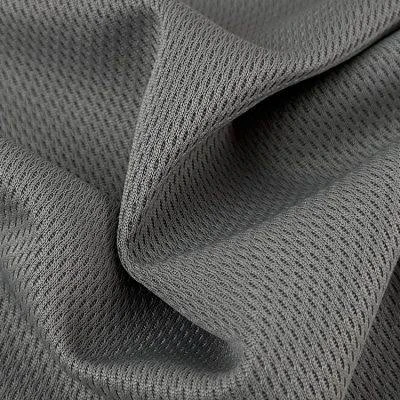
Birdseye mesh describes a knitted fabric with a small repeating eye-like texture. It is often selected for training tops and sportswear panels. The name describes the surface, not a guaranteed fibre content or performance level, so composition, openness, weight and finishing should be agreed for the order.
These are starting points for fabric selection. The chosen quality is approved for the specific garment.
GSM is fabric mass per square metre. It helps compare weight, but does not alone establish quality, coverage or performance.
Open texture can change what is visible beneath the garment. Review the proposed shade in bright light, and at the stretch or ease expected in use.
Fine type and thin lines can lose definition on a textured base. Approve a decorated sample at its intended size, including the team name, numbers or sponsor-style artwork.
Tell us if the garment will rub against bags, rough seating or hook-and-loop fastenings. Review snagging and seam finishing against the environment in which the top will be worn.
Artwork and fabric should be approved together. Explore our decoration services for the wider process.
Confirm polyester content and test the print definition across the texture.
Review thin lines and ink coverage on the actual mesh rather than on a smooth artwork proof.
Check whether a stitched badge needs backing or a more stable fabric panel to support it.
Follow the finished garment care label. Keep the mesh away from open hook-and-loop fastenings and rough accessories that could catch the surface. Protect printed areas from unapproved heat.
For sample approval, inspect the mesh after fitting and laundering. Check that the selected openness works with the garment cut, and that seams, labels and decorations remain comfortable against the body.
Practical answers for choosing, decorating and caring for the fabric in your garment range.
It has a repeating small eye-like texture. The size and openness differ between qualities, so use a physical swatch to approve the surface rather than relying only on a photograph.
It can be a useful option. Review the actual fabric for comfort, coverage and the desired hand, then assess it in the intended training-shirt pattern.
No. The term describes a texture rather than a fibre. Polyester is common in sportswear versions, but the selected composition needs to be confirmed on the specification.
No. Texture alone is not evidence of a particular moisture-management result. If your product needs that performance, include the requirement in the fabric brief and agree how it will be verified.
Suitable polyester versions can be. Approve the base, heat conditions and print clarity with a strike-off, particularly for small text and areas where the texture is pronounced.
Coverage varies with the openness, shade, weight and stretch of the selected fabric. Check a finished sample in the light and fit in which it will be used.
Yes, for example as selected side or ventilation panels. Approve shade matching, seam comfort and how the two fabrics move and wash together.
The risk depends on the yarn and construction as well as use. Check the chosen quality against rough equipment and exposed fastenings, and agree any required snagging assessment before bulk.
Follow the care label and keep rough fastenings from catching the mesh. Use only the permitted drying and pressing methods, and check any separate care instructions for numbers or badges.
State the garment, coverage preference, fabric weight or reference swatch, shade, artwork and quantity. Add any airflow, moisture or durability requirement so it can be discussed before sample approval.
Send the design, intended fit, colours, artwork, size range and quantity. If you have a reference garment, use it to communicate the hand and finish you want. We discuss the fabric, make the sample and record the approved construction before bulk production.
Review dimensions, shade, decoration and the care result together. Keep the signed-off sample and written specification as the reference for the order.
See how sampling worksTell us the garment, fit, colour, artwork and quantity. We will discuss the fabric as part of your custom apparel order, with the selected specification, sample and minimum confirmed in writing.